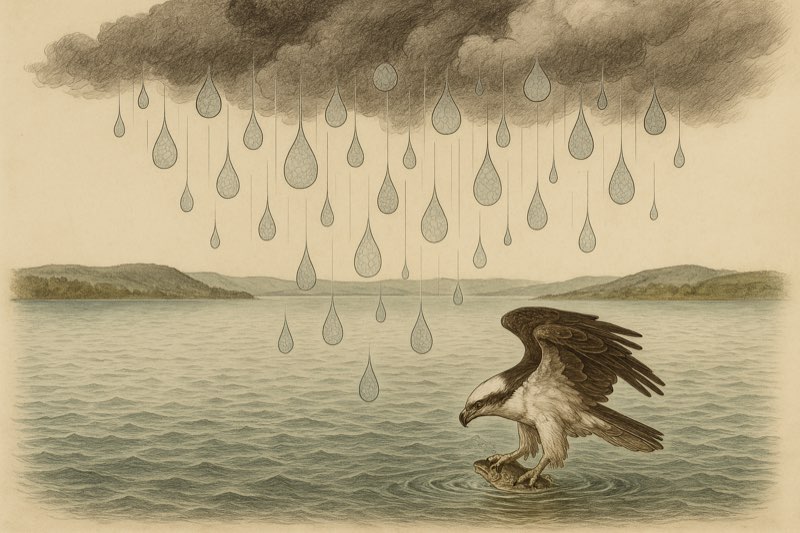
This was the week the federal government told communities they're on their own with forever chemicals — just as scientists confirmed that PFAS is falling from the sky.
On May 18, the EPA proposed two rules that would fundamentally reshape federal PFAS drinking water protections. The first would rescind maximum contaminant levels (MCLs) for four PFAS compounds: PFNA, PFHxS, HFPO-DA (known as GenX), and PFBS mixtures. The second would push the compliance deadline for PFOA and PFOS standards from 2029 to 2031. The White House Office of Management and Budget had cleared the proposals on May 1, and now they're heading for the Federal Register.
The current standards, finalized in April 2024, set limits at 4 parts per trillion for PFOA and PFOS and 10 parts per trillion for GenX, PFNA, and PFHxS — concentrations so small they're measured in drops per Olympic swimming pool. The science supporting those limits linked PFAS exposure to cancer, liver disease, developmental harm in children, and cardiovascular damage. That science hasn't changed. What changed is the political appetite for acting on it.
The Cape Fear Problem
No community understands what's at stake more acutely than the Cape Fear River Basin in North Carolina. Since 2017, when reporters revealed that Chemours' Fayetteville Works facility had been discharging GenX into the river, more than 500,000 people downstream have lived with the knowledge that their drinking water source was contaminated by industrial PFAS pollution.
Local utilities responded. The Cape Fear Public Utility Authority built granular activated carbon filtration at its Sweeney Water Treatment Plant — a system that now serves nearly 200,000 people. Ratepayers in Wilmington and surrounding communities shouldered hundreds of millions of dollars in treatment costs to remove chemicals they never put in the water.
With GenX limits rescinded, the federal mandate to treat for it disappears. The investments those communities made become voluntary, and the legal foundation for holding polluters financially accountable gets weaker. As the Southern Environmental Law Center put it: this rollback "is a slap in the face to every community that has fought for clean drinking water."
It's Raining PFAS
The same week the EPA moved to ease industrial pressure on drinking water compliance, Minnesota Sea Grant researchers published findings that put the contamination problem in stark relief. Over a two-year study monitoring precipitation at five locations across Minnesota and Michigan, they found PFAS in every single rain and snow sample collected.
Every one.
The research, funded by the U.S. Geological Survey and set for formal presentation at the National Atmospheric Deposition Program Scientific Symposium in June, shows that atmospheric deposition — PFAS carried by air currents and returning to earth through precipitation — is a persistent, widespread contamination pathway. Researchers used atmospheric transport modeling to trace air mass trajectories before precipitation events, and the data suggests PFAS pollution can travel long distances from industrial sources before settling into watersheds, lakes, and ecosystems.
Perhaps most concerning: the study found that routine testing captures only a small fraction of the fluorinated chemicals actually present in precipitation. The contamination is more extensive than our monitoring systems are designed to detect.
Coal Wastewater Gets a Pass Too
PFAS wasn't the only protection rolled back this week. On May 15, the EPA proposed weakening 2024 rules that required coal-fired power plants to treat toxic wastewater — containing heavy metals like mercury, arsenic, and selenium — before it enters streams and rivers through contaminated groundwater. The Biden-era standards were projected to reduce waterway pollutants by over 330,000 tons per year. The EPA's new proposal would exempt plants from requirements to treat drainage from coal ash ponds and landfills, claiming the original rule was overly costly to industry.
The stated rationale: growing energy demand from data centers and AI requires keeping coal plants running without expensive environmental compliance. The unstated cost: the rivers and communities downstream of those plants absorb the pollution instead.
States Are Moving Anyway
Here's where the picture shifts from discouraging to instructive. States are not standing still.
According to Safer States, at least 31 states are expected to consider PFAS legislation in 2026. Nearly 100 new bills have been introduced across 17 states this year alone, with another 280 carried over from 2025. New York's legislature has proposed its own drinking water limits covering all six PFAS compounds the federal government is retreating from. Maryland just enacted laws prohibiting sewage sludge application on agricultural land when PFAS is present. Multiple states are advancing product bans, remediation funding mechanisms, and source-reduction requirements.
The legal landscape is fragmented, but it's not static. The D.C. Circuit Court denied EPA's attempt to vacate the existing PFAS MCLs back in January 2026, and denied a motion to stay related litigation in March. The current federal standards remain legally in effect while rulemaking and court challenges play out on parallel tracks.
What This Means
The pattern emerging this week isn't new, but it's sharpening. Federal environmental protections are being pulled back — on PFAS in drinking water, on coal plant wastewater, on vehicle emissions, on refrigerant standards. Each rollback is framed as deregulation for affordability. But what's actually happening is a cost transfer: from industry balance sheets to community water bills, from corporate compliance departments to local treatment plants, from regulated discharges to unmonitored contamination.
Meanwhile, the science keeps arriving. PFAS falls from the sky onto the Great Lakes. GenX persists in the Cape Fear. Coal ash leaches into groundwater. The chemicals don't check the Federal Register before they contaminate a well.
At EPR Foundation, we believe protection doesn't require picking political sides. It requires looking clearly at what's in the water, who put it there, and who's paying to clean it up. This week's news makes the answer to all three questions harder to ignore.
The public comment period on the PFAS proposals runs 60 days, with a virtual public hearing scheduled for July 7, 2026. If your community has a PFAS story, this is the time to tell it.